A randomised trial answers a specific question: what happened on average across this group. It is the right tool for approving a drug. It is a poor tool for deciding whether magnesium helps you sleep.
The average hides the responders#
Imagine an intervention where a third of people improve substantially, a third do nothing, and a third get slightly worse. The published result is "no significant effect". The conclusion most readers draw is "it does not work".
Both statements are true about the group. Neither is true about the third of people it clearly helped.
What an n of 1 experiment looks like#
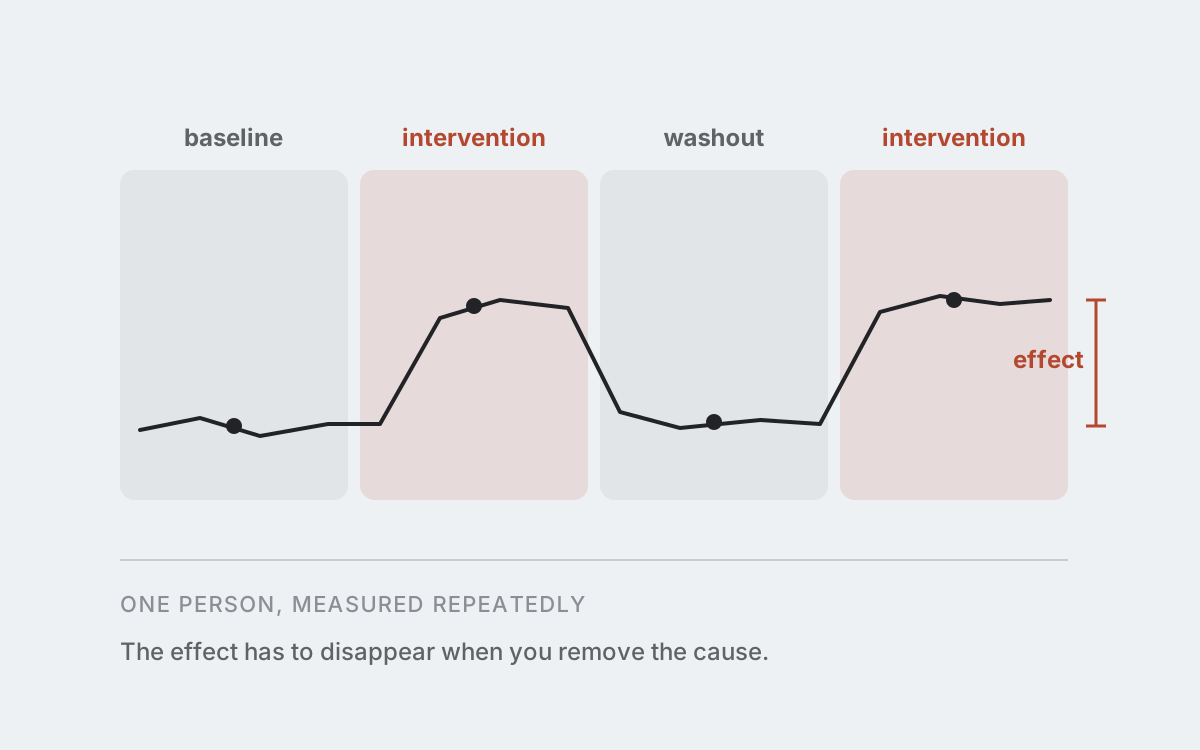
The unit of study is one person, measured repeatedly, with the intervention switched on and off.
- Pick one variable. One. Two variables at once produce a result you cannot attribute.
- Pick the outcome before you start, and pick something you already measure reliably. Deep sleep minutes, resting heart rate, morning HRV.
- Establish a baseline of at least seven days. Two weeks is better, because weekends behave differently from weekdays.
- Run the intervention for the same length as the baseline.
- Wash out and repeat. A single A/B pair is suggestive. An A/B/A pattern is convincing, because the effect has to disappear when you remove the cause.
The part everyone skips#
Deciding the outcome before the experiment. If you choose after, you will find something that moved, because with twenty metrics something always moved. That is not a finding, that is arithmetic.
What counts as a result#
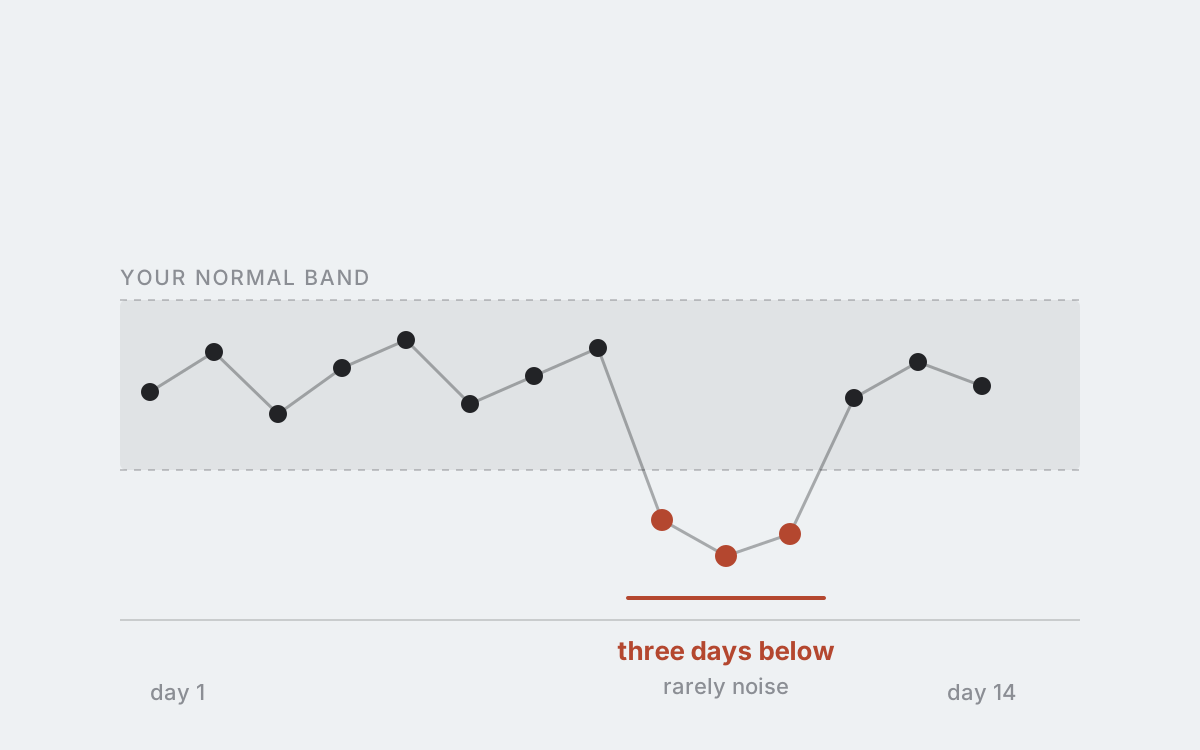
You are not doing statistics, you are looking for an effect large enough to matter and consistent enough to trust:
- Did the metric move outside its normal variation?
- Did it move in the same direction both times you ran the intervention?
- Did it come back when you stopped?
Three yeses is a real personal finding, and it beats any population study for the purpose of deciding what you personally should do tomorrow.
Three noes is also a result, and a valuable one: you can stop spending money and attention on it.