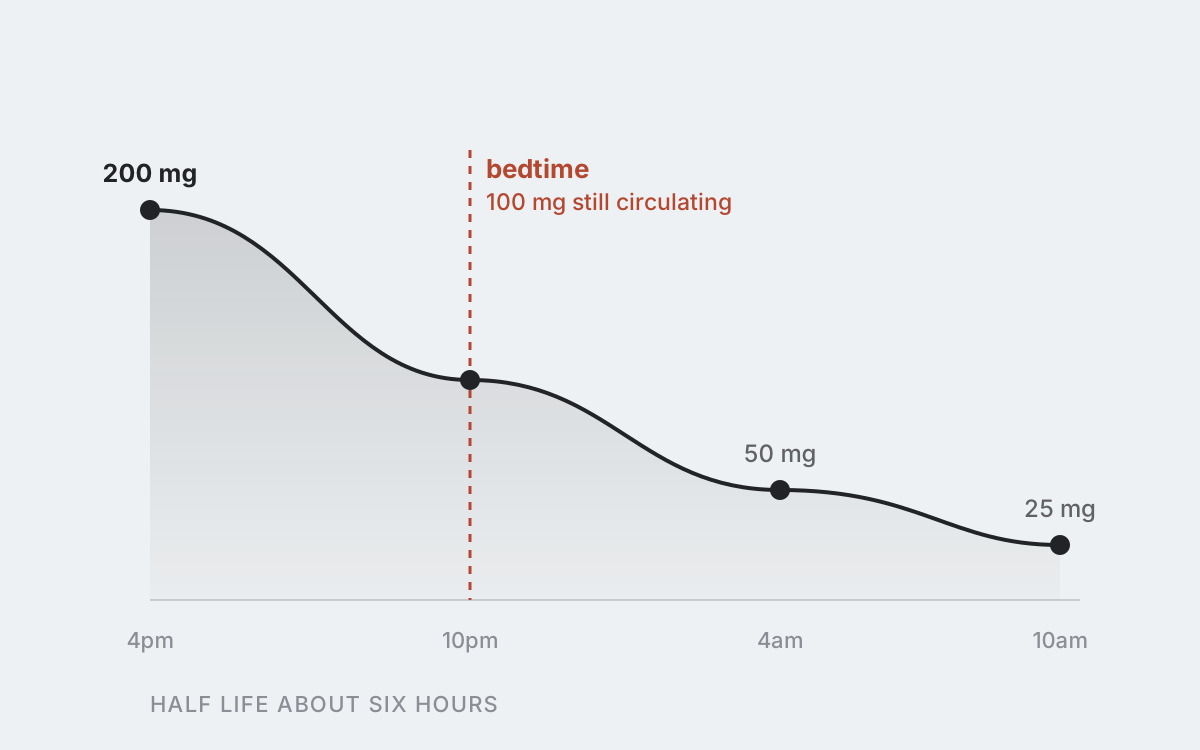
Caffeine's half life in a healthy adult is about five to six hours. Half life means what it means: after that window, half the dose is still circulating.
Run the numbers#
A 200 mg coffee at 4pm, assuming a six hour half life:
| Time | Caffeine still circulating |
|---|---|
| 4pm | 200 mg |
| 10pm | 100 mg |
| 4am | 50 mg |
| 10am next day | 25 mg |
You go to bed with the equivalent of a strong espresso in your system. Most people in this situation report that they "sleep fine", and they are not lying: caffeine interferes far more with sleep depth than with sleep onset.
Why you do not notice#
Adenosine builds up through the day and creates sleep pressure. Caffeine does not remove adenosine, it blocks the receptor. The pressure is still there, you just stop feeling it.
The tiredness you avoided at 4pm is not cancelled. It is deferred, and it is waiting for you with interest.
So you fall asleep on schedule and lose deep sleep instead. The next morning feels flat, which is reliably treated with more coffee, earlier.
Individual variation is large#
The CYP1A2 enzyme does most caffeine clearance, and its activity varies
several fold between people. Fast metabolizers genuinely can drink an espresso
after dinner. Slow metabolizers are still clearing lunch at midnight. Population
advice is a starting point, not an answer.
What to test#
Do not quit. Move the last dose earlier, and watch a metric that reflects depth rather than duration:
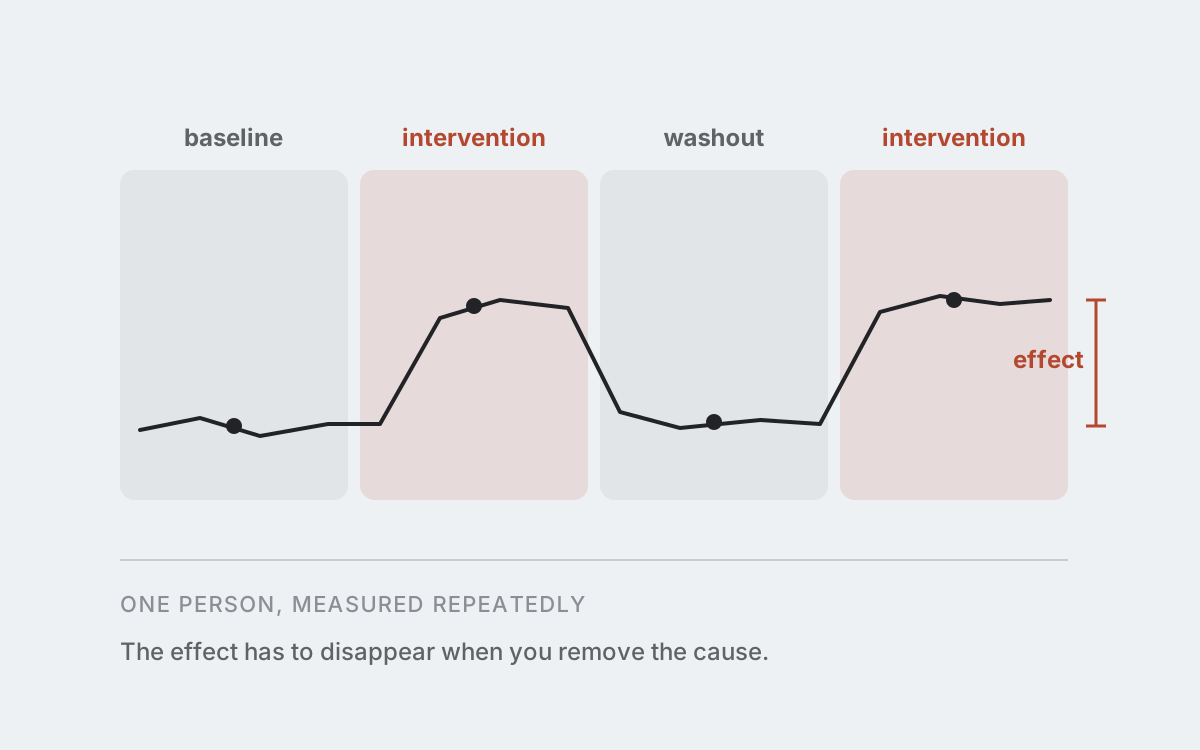
- Pick your current cutoff time and record deep sleep for a week.
- Move the cutoff two hours earlier for the next week. Change nothing else.
- Compare deep sleep and resting heart rate across the two weeks.
If nothing changes, you have your answer and you can stop worrying about it. If it changes, you found a lever that costs you nothing after 2pm.